
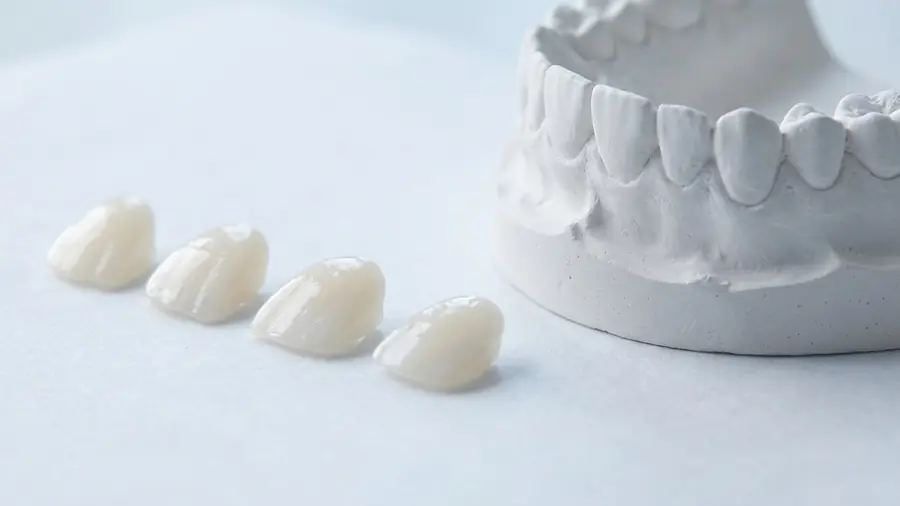
Porcelain veneers
Thin shells bonded to the front of the teeth, used to correct colour, shape, small gaps and chips. Veneers last roughly 10 to 15 years with good care. They are not permanent, and placing them removes a small amount of enamel, so it is a long-term decision rather than a reversible one.
Composite bonding
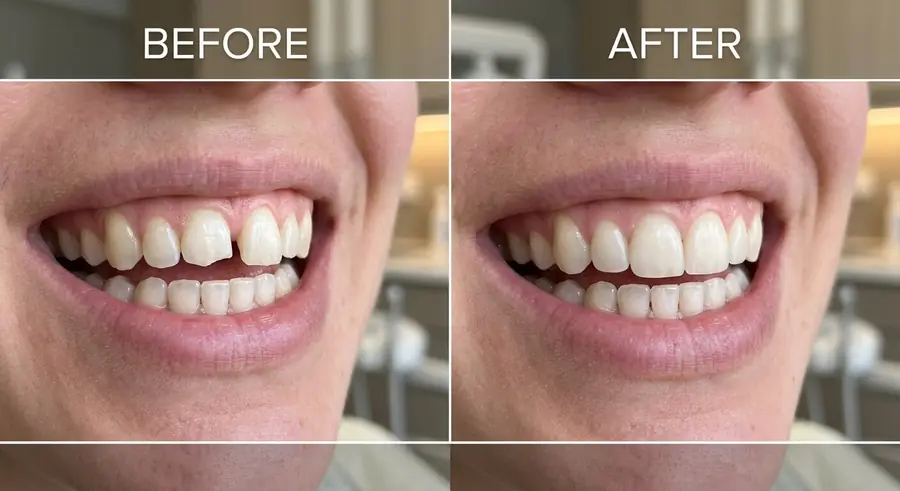
Tooth-coloured resin shaped directly onto the tooth in a single visit. Cheaper and less invasive than a veneer, and a good fit for a chipped edge or a narrow gap, though it stains sooner and does not last as long.
Teeth whitening
In-chair whitening or custom take-home trays, both supervised by a dentist. Results typically hold for six months to two years depending on diet and oral care. More on whitening options.
Which option suits you
Whitening lifts colour but changes nothing else. Bonding repairs small damage. Veneers change shape and colour together. If a tooth is cracked or heavily filled, a crown is the honest answer rather than a cosmetic fix - we will say so.
Common questions
Are veneers permanent?
No. They last 10 to 15 years with good care, and the enamel removed to place them does not grow back, so the tooth will always need a covering afterwards.
What is the difference between veneers and crowns?
A veneer covers the front surface of a tooth and is mainly cosmetic. A crown covers the whole tooth and is restorative, used when a tooth is damaged or decayed.
Can you fix a chipped or cracked tooth?
Yes - usually with bonding, a veneer or a crown, depending on how much of the tooth is affected.
Visit us on campus
Open in Google Maps · free underground parking